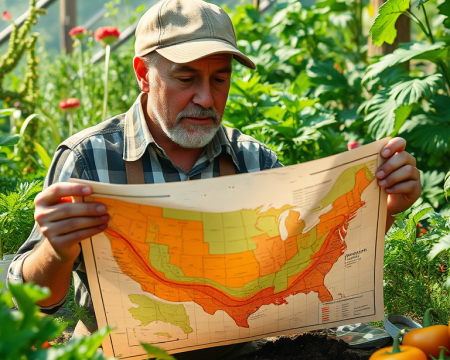
As vegetable gardeners, we know that hardiness zones are key to understanding which vegetables can thrive in our area. However, it’s also essential to consider the local environment and terrestrial ecosystems surrounding us, such as soil, climate, and existing plants, as they can impact how well our vegetables grow.
Let’s take a closer look at hardiness zones and terrestrial ecosystems. Hardiness zones are regions that indicate which types of plants can survive in different climates, especially by showing how cold it gets in winter. Gardeners and farmers use these zones to choose the best plants for their locations. In North America, the USDA Plant Hardiness Zone Map divides the continent into 13 zones, with each zone representing a 10°F difference in the lowest average winter temperatures. This map helps us understand how well plants can handle cold weather.
On the flip side, terrestrial ecosystems are communities of living things on land. These ecosystems include all the plants, animals, and tiny organisms that interact with each other and their environment, which consists of soil, air, and water. Examples of terrestrial ecosystems include forests, grasslands, deserts, and tundras. They are classified based on factors like climate (weather patterns), types of plants, and landscape features. Terrestrial ecosystems are important because they show how different species rely on each other and how energy flows throughout the ecosystem. In simple terms, these ecosystems highlight the variety of life and the connections between living things and their surroundings. While terrestrial ecosystems give a broader view of biological communities and their interactions, hardiness zones specifically focus on how temperature affects plant survival.

It’s interesting to note that terrestrial ecosystems can span different hardiness zones. In a single ecosystem, variations in elevation, proximity to bodies of water, and microclimates can create diverse hardiness zones. Conversely, within a single hardiness zone, there can be multiple types of terrestrial ecosystems. For example, a hardiness zone characterized by moderate temperatures might support forests, grasslands, and wetlands, each with its own unique species and environmental conditions.
In the final bloom of our discussion, understanding hardiness zones and terrestrial ecosystems is important for successful vegetable gardening. Hardiness zones tell us which plants can survive the cold in our area, helping us choose the right vegetables to grow. On the other hand, terrestrial ecosystems show us how different plants, animals, and environments interact with each other. Both concepts work together to help us create healthy gardens. By considering the hardiness zones along with the local ecosystem, we can grow our vegetables more effectively and appreciate the important relationships in nature that support plant growth.
At Urban Gardening 4u2day, we are passionate about promoting eco-friendly and sustainable vegetable gardening practices. Our mission is to encourage individuals and communities to grow their own produce in environmentally conscious ways.
Images: AI-Generated
Prompt/edited: Tom Myrick
Written by: Tom Myrick
About the Writer/Photographer: Tom Myrick
Be friends with Tom on Facebook: Tom Myrick

You must be logged in to post a comment.