Growing Healthy Kale: A Comprehensive Guide’ for valuable insights!With our kale planted in the Veggie-Bed, the beauty of its growth process—how it gracefully utilizes sunlight and other environmental resources—provides inspiring insights into its cultivation. This knowledge helps us align our gardening practices with the natural needs of the kale plants at Eco Tom’s sanctuary, fostering a deep appreciation for the kale’s journey.
Kale, a resilient plant, flourishes in cooler temperatures and partial to full sunlight. It appreciates well-drained, fertile soil rich in organic matter, which helps retain moisture and nutrients. By harnessing the power of sunlight, soaking up water, absorbing essential nutrients, and breathing in fresh air from its surroundings. Kale is a vibrant green powerhouse that thrives in the perfect blend of nature’s elements. Time to dig into how this works:
Kale absorbs sunlight through its leaves using a pigment called chlorophyll. This light energy is converted into chemical energy, which helps the plant produce sugars from carbon dioxide in the air and water from the soil. These sugars fuel the plant’s growth.

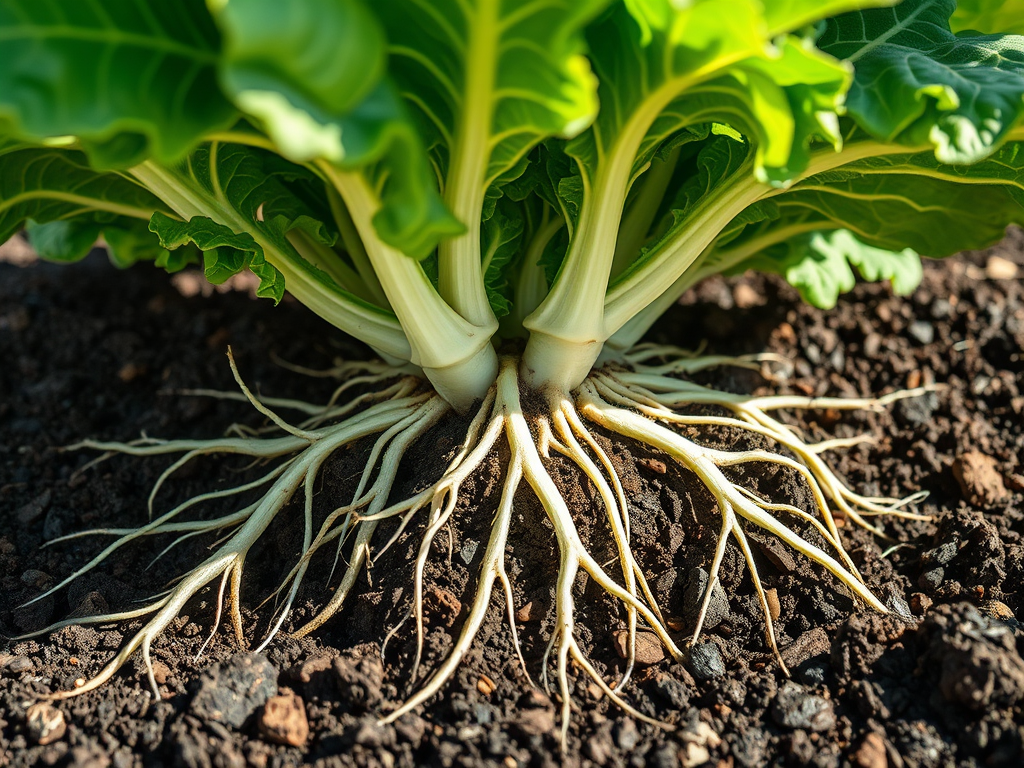
The roots of kale extend into the soil to take up essential nutrients such as nitrogen, potassium, and phosphorus. These nutrients, along with others like calcium and magnesium, help the plant develop strong stems, lush leaves, and a vibrant green color. The roots also absorb water, which is transported throughout the plant. Water is vital for maintaining the plant’s structure and is a critical component of photosynthesis.
Kale takes in carbon dioxide (CO2) from the air through tiny pores on its leaves called stomata, which are crucial for gas exchange. During photosynthesis, kale uses sunlight to convert CO2 and water into sugars and other organic compounds that serve as energy sources. In this process, it releases oxygen (O2) into the atmosphere.

When harvesting, we start with the outer leaves while leaving the inner ones to continue growing for a constant supply throughout the season. Kale leaves are generally ready to eat when they are about the size of our hand. We harvest the young, tender leaves of baby kale once they are a few inches long, typically about 25 to 30 days after planting. For mature kale, we wait around 50 to 75 days until the leaves are fully grown but still tender and have a deep green color, reminding us of the virtue of patience in gardening.

Getting to the root of it, by deeply understanding the intricate relationship between our kale and its surrounding environment, we have the opportunity to enhance our cultivation techniques. This understanding allows us to optimize growth conditions, leading to a rich, abundant harvest of this vibrant and nourishing vegetable, full of essential nutrients and health benefits.

Eco Tom blends science with the heart of a gardener and encourages you to join him on his journey.
AI played a role in formulating this content, helping to refine and organize the information presented.
Eco Tom’s Sanctuary and UrbanGardening4u2Day.com represent a combined effort to promote and educate about sustainable gardening practices. The sanctuary acts as a practical demonstration site, while the website extends the reach through a variety of digital resources, blending real-world experiences with scientific knowledge.
Images: AI-Generated
Audio Deep Dive: AI-Generated based on user-provided sources and instructions
Eco Tom and Eco Tom’s Sanctuary is inspired by a real home garden and true-life experiences.
-The information provided on UrbanGardening4u2day.com is intended for general informational purposes only and is shared in good faith. We make no representations or warranties of any kind—whether express or implied—regarding the accuracy, adequacy, validity, reliability, availability, or completeness of any information on this website-
© Thomas Myrick 2025. All rights reserved

You must be logged in to post a comment.