Tomato Root Development: A Comprehensive Study Guide‘ for valuable insights!As part of our ongoing effort to understand the plant science behind the vegetables grown in the ‘Veggie-Bed’ at Eco Tom’s Sanctuary, we are digging into the importance of root development and its stages in tomato plants. Understanding the stages of root development in tomato plants is essential for several reasons that contribute to the overall health and productivity of the plants.
Each stage of root development plays a unique role in the plant’s growth cycle. By familiarizing themselves with these stages, we can tailor our care strategies to meet the specific needs of the plants at different times. For example, during early root formation, ensuring adequate moisture is crucial, while in later stages, proper nutrient application can enhance growth. This targeted approach helps promote maximum growth potential and ensures that the plants thrive.
Early recognition of the various stages of root development allows for proactive monitoring of the plants. Our awareness can lead to the early identification of potential root-related issues, such as root rot or pest infestations. When problems are detected early, suitable interventions—such as applying organic treatments or adjusting watering practices—can be implemented to mitigate damage and maintain plant health.

Understanding how root systems function and interact with the soil environment is vital for maintaining soil health. Knowledge of root dynamics enables us to practice effective crop rotation, which minimizes soil nutrient depletion and interrupts pest life cycles. Additionally, the use of soil amendments can enhance soil structure and fertility, leading to a more supportive environment for robust root development. This, in turn, contributes to sustainable agricultural practices.
The relationship between healthy root systems and overall plant yield cannot be overstated. Healthy roots are crucial for the efficient uptake of nutrients and water, which directly influence the quality and quantity of tomato fruits produced. Strong root systems enable plants to access deep soil resources, leading to better growth and enhanced fruit development.
By understanding the complex and vital process of root development in tomato plants, we can create optimal conditions for plant growth. This knowledge equips us to make informed decisions that enhance plant health, leading to fruitful harvests and successful gardening endeavors. With this in mind, what are the stages of root development in tomato plants?

Stages of Root Development
Tomato plants undergo several stages of root development, each crucial for the plant’s overall health and productivity:
1) Germination Stage
During this initial stage, the seed absorbs water, swells, and eventually breaks the seed coat. The radicle, or the embryonic root, emerges and begins to grow downward, anchoring the plant.
2) Seedling Stage
As the radicle develops, lateral roots form, increasing the root surface area and enhancing the plant’s ability to absorb water and nutrients.
3) Vegetative Growth Stage
In this stage, the root system expands rapidly both vertically and horizontally. The primary root deepens, and a dense network of secondary and tertiary roots forms, providing a strong foundation for the plant.
4) Flowering Stage
The root growth slows down during flowering as the plant diverts its energy towards producing flowers and fruits. However, the established root system continues to support the plant by delivering essential nutrients and water.
5) Fruiting Stage
At this final stage, the root system maintains its nutrient and water uptake function to support the developing fruits. The health and efficiency of the roots directly affect the size and quality of the tomatoes produced.
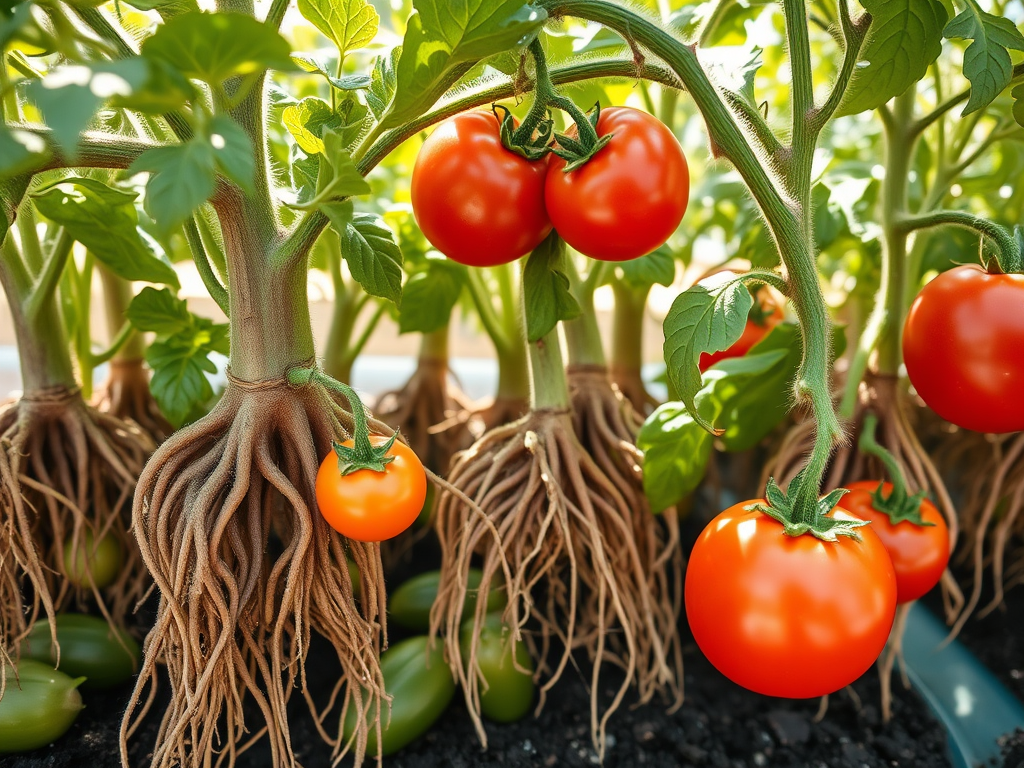
So, to put it all into one basket, understanding the stages of root development in tomato plants is essential for fostering healthy growth and maximizing yields. By recognizing each stage—from germination to fruiting—we can implement tailored care strategies that address the plants’ specific needs at every phase. Proactive monitoring and informed interventions help prevent potential root-related issues and contribute to sustainable gardening practices. Nurturing robust root systems will lead to thriving tomato plants and bountiful harvests, enriching our gardening experiences at ‘Eco Tom’s Sanctuary.’ Embracing this knowledge empowers us to cultivate vibrant and productive vegetable gardens, reflecting our commitment to both plant health and environmental sustainability.

Eco Tom blends science with the heart of a gardener and encourages you to join him on his journey.
AI played a role in formulating this content, helping to refine and organize the information presented.
Eco Tom’s Sanctuary and UrbanGardening4u2Day.com represent a combined effort to promote and educate about sustainable gardening practices. The sanctuary acts as a practical demonstration site, while the website extends the reach through a variety of digital resources, blending real-world experiences with scientific knowledge.
Images: AI-Generated
Audio Overview: AI-Generated based on user-provided sources and instructions
-The information provided on UrbanGardening4u2day.com is intended for general informational purposes only and is shared in good faith. We make no representations or warranties of any kind—whether express or implied—regarding the accuracy, adequacy, validity, reliability, availability, or completeness of any information on this website-
© Thomas Myrick 2025. All rights reserved

You must be logged in to post a comment.