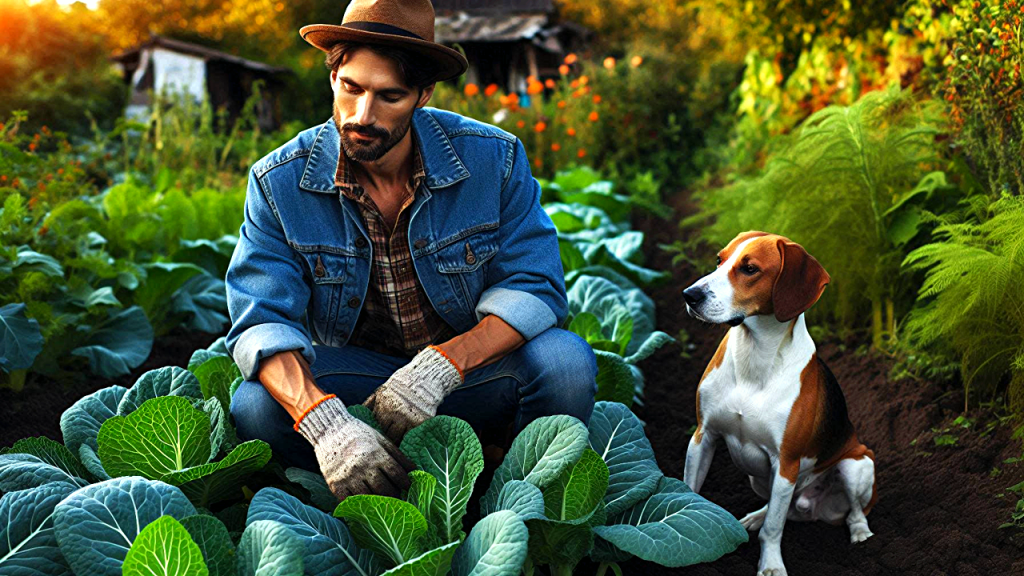
As we prepare to transition into the golden hues of autumn, there’s nothing quite like the satisfaction of growing collards at the Veggie-Bed. The fall season offers the perfect conditions for cultivating these leafy greens, enhancing their flavor and tenderness. With cooler temperatures, occasional frosts, and fewer pest challenges, it’s an ideal time to embark on a rewarding journey of nurturing and harvesting these nutritious greens:
Fall is an excellent time to grow collards at the Veggie-Bed. The cooler temperatures and occasional frosts make the leaves sweeter and more tender. Additionally, there are fewer pest problems, and the extended growing season allows for multiple harvests. The warm soil from the summer and consistent moisture from fall rains also contribute to the favorable conditions for collard growth.
For our fall harvest, we start by counting back about 8-10 weeks from the first expected frost. Ideally, we sow the collard seeds directly into the soil from late August to early September.
Our spot in our garden for growing collards receives full sun most of the day and partial shade in the late afternoon. Collards thrive with at least six hours of sunlight daily.
The soil is well-drained and fertile. Prior to sowing, we incorporate organic matter like compost or well-rotted manure into the soil.
We space the collard seeds 18 inches apart for adequate room as they grow in rows. Good air circulation helps prevent fungal diseases, especially in warm, humid regions. The seeds are sown 1/4 to 1/2 inch deep.
Collards need about 1 inch of water per week, adjusting based on rainfall. Keeping the soil evenly moist, we avoid overwatering. Mulch is applied around the plants to retain soil moisture and suppress weeds.
We check plants regularly for pests like aphids and cabbage worms; removing any pests by hand or using organic pest control methods if necessary.
The collard leaves are harvested when they are about 10 inches long. We pick the outer leaves first, allowing the inner leaves to continue growing. When possible, we wait until after the first frost to harvest, as the cold can make the leaves sweeter. The flavor of collards kissed by autumn frost is unbeatable.
We look forward to seeing our collards thrive this fall and enjoying the sweet and tender harvest. Growing and caring for them is rewarding and educational, and we are excited to continue learning and experimenting with different gardening techniques. We can’t wait to share the delicious flavors of our homegrown collards with family and friends.
Image: AI-Generated
Prompt/edited: Tom Myrick
Written by: Tom Myrick
About the Writer/Photographer: Tom Myrick
YouTube: Urban Gardening 4u2day
Facebook: Urban Gardening 4u2day


You must be logged in to post a comment.