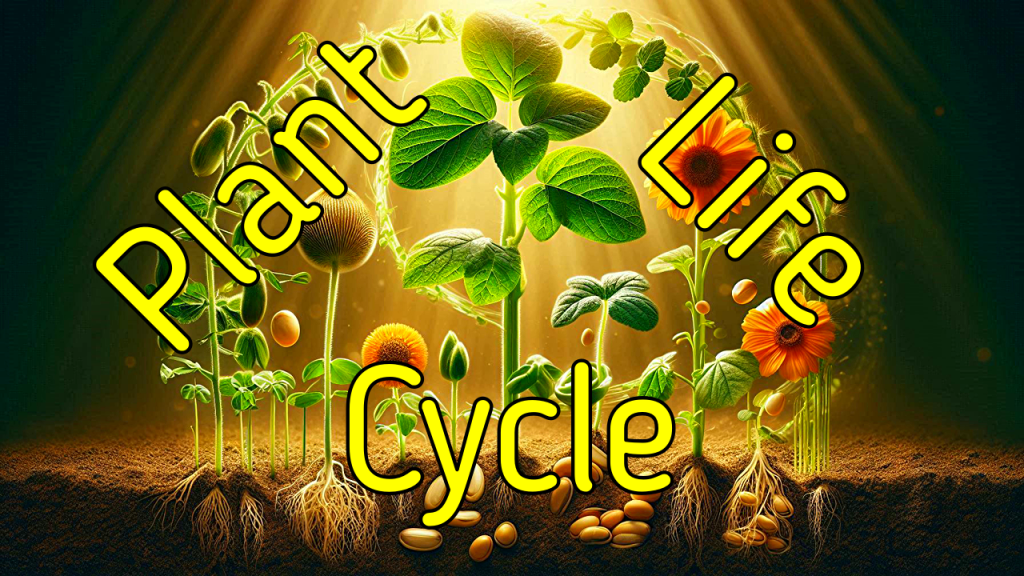
Plant Life Cycle Study Guide
Plant Life Cycle FAQ
- What is the significance of understanding the plant life cycle? Understanding the plant life cycle is crucial because it highlights the complex processes of growth and reproduction in the plant kingdom. This knowledge enables us to appreciate the resilience of plants and their critical role in maintaining the balance of our ecosystem and providing the necessary resources for life on Earth. It also allows gardeners and agricultural professionals to optimize their plant care strategies.
- What conditions are essential for seed germination? Seed germination requires several key conditions to be met: the presence of water, an appropriate temperature, and sometimes exposure to light. These factors allow the seed to absorb water, causing it to swell and the seed coat to break, which enables the emergence of the embryonic root and shoot.
- Why is the seedling stage considered a vulnerable period for a plant? The seedling stage is a vulnerable period because the plant is still heavily reliant on the nutrient reserves within the seed. While it is developing its first true leaves for photosynthesis, it must also establish a robust root system to support continued growth. During this phase, the plant is susceptible to environmental stresses and competition.
- What is the main focus of a plant during its vegetative stage? During the vegetative stage, the plant’s primary focus is on rapid and extensive growth. It develops a strong stem, a deeper root system for water and nutrient absorption, and additional leaves to maximize photosynthesis. This stage is crucial for preparing the plant for the reproductive phase.
- What is the role of flowers in the plant life cycle? Flowers are vital for reproduction. They contain the plant’s reproductive organs, where pollination occurs. Pollen is transferred from the male part of the flower (stamen) to the female part (pistil) by wind, insects, or other means. Successful pollination leads to the formation of seeds, which are essential for the continuation of the plant species.
- How do plants ensure the dispersal of their seeds? Plants have developed various methods for seed dispersal to new locations: through wind, water, animals, or mechanical means. Wind dispersal utilizes light seeds or fruits that can be carried by breezes. Water dispersal is common in plants near water bodies where currents move seeds. Animal dispersal involves animals eating seeds and then excreting them elsewhere or by carrying seeds on their fur. Mechanical dispersal occurs when seeds are expelled from the fruit with force.
- What happens to a plant during senescence? Senescence is the final stage of the plant’s life cycle, where its growth slows down and it eventually dies. This phase is characterized by the breakdown of cellular structures and the recycling of nutrients back into the soil. Senescence is a natural process that enriches the soil and supports future plant growth.
- How does the plant life cycle contribute to the overall health of an ecosystem? The plant life cycle is essential for the health of an ecosystem in many ways. It begins with a seed, and the plant grows to eventually disperse its own seeds, thereby ensuring the continuation of the plant species. The process of plant growth, photosynthesis, and decomposition contribute to atmospheric balance, nutrient cycling, and food webs. When the plants decompose, they return nutrients to the soil to support future plant life.
Glossary of Key Terms
Germination: The process by which a seed awakens from dormancy and begins to grow. It requires water, the correct temperature, and sometimes light.
Radicle: The embryonic root that emerges first from the seed, anchoring the plant and absorbing water and minerals.
Plumule: The embryonic shoot that pushes upwards from the seed and eventually becomes the plant’s stem and leaves.
Photosynthesis: The process by which plants convert light energy into chemical energy, using water, carbon dioxide, and chlorophyll.
Vegetative Stage: The period in a plant’s life cycle focused on growth, during which the plant develops a robust stem, root system, and leaves.
Flowering Stage: The stage of plant development focused on reproduction, during which flowers bloom and are pollinated.
Pollination: The transfer of pollen from the male part (stamen) of a flower to the female part (pistil).
Senescence: The final stage of a plant’s life cycle, during which it ages, breaks down, and eventually dies.
Seed Dispersal: The various mechanisms plants use to distribute their seeds to new locations, such as wind, water, animals, or mechanical means.
Embryo: The part of the seed that contains the beginnings of the future plant.
Quiz
Instructions: Answer each question in 2-3 complete sentences.
- What are the three primary requirements for seed germination?
- Describe the difference between the radicle and the plumule.
- What is the primary function of a plant’s leaves?
- What is the main purpose of the vegetative stage of a plant’s life cycle?
- Explain the importance of pollination in plant reproduction.
- What is the purpose of fruit development in plants?
- Name three methods of seed dispersal.
- What is senescence in the context of a plant’s life cycle?
- How do decaying plants contribute to the ecosystem?
- Summarize the overall significance of understanding the plant life cycle.
Answer Key
- The three primary requirements for seed germination are water, the right temperature, and sometimes light. These factors help the seed awaken from dormancy and begin its growth process. When these conditions are met, the seed absorbs water and the process of germination begins.
- The radicle is the embryonic root, which emerges first from the seed, anchoring the plant in the soil and absorbing water and minerals. The plumule is the embryonic shoot, which pushes its way upward, breaking through the soil to reach sunlight.
- The primary function of a plant’s leaves is photosynthesis, the process of converting light energy into chemical energy. This process is crucial for the plant’s growth and survival, as it produces the energy the plant needs to grow.
- The main purpose of the vegetative stage is for the plant to focus on growing taller and stronger, developing a robust stem and root system to support further growth. During this period, plants produce more leaves for photosynthesis, enabling the plant to convert sunlight into energy.
- Pollination is crucial for plant reproduction because it is the process of transferring pollen from the male part of the flower to the female part, which leads to the formation of seeds. Without pollination, the flowers cannot produce seeds and the plant species would not be able to continue.
- The purpose of fruit development is to protect and provide nutrients for the developing seeds inside. The fruit also serves a role in seed dispersal, aiding in the spread of the species.
- Three methods of seed dispersal are wind, water, and animals. Wind dispersal relies on light seeds being carried away by the breeze, water dispersal occurs near bodies of water, and animals disperse seeds through eating, excreting, or by carrying them on their fur.
- Senescence is the final stage of a plant’s life cycle, during which the plant’s growth slows down, cellular structures break down, and it eventually dies. This stage is essential for nutrient recycling within the ecosystem.
- Decaying plant matter returns valuable nutrients to the soil, which enriches it for future plants. This recycling process is crucial for maintaining the fertility of the soil and sustaining the ecosystem.
- Understanding the plant life cycle is important because it highlights the complexity and resilience of plants and their crucial role in maintaining the balance of our ecosystem and providing the resources necessary for life on Earth.
Eco Tom blends science with the heart of a gardener and encourages you to join him on his journey.