How does lightning contribute to healthy soil?
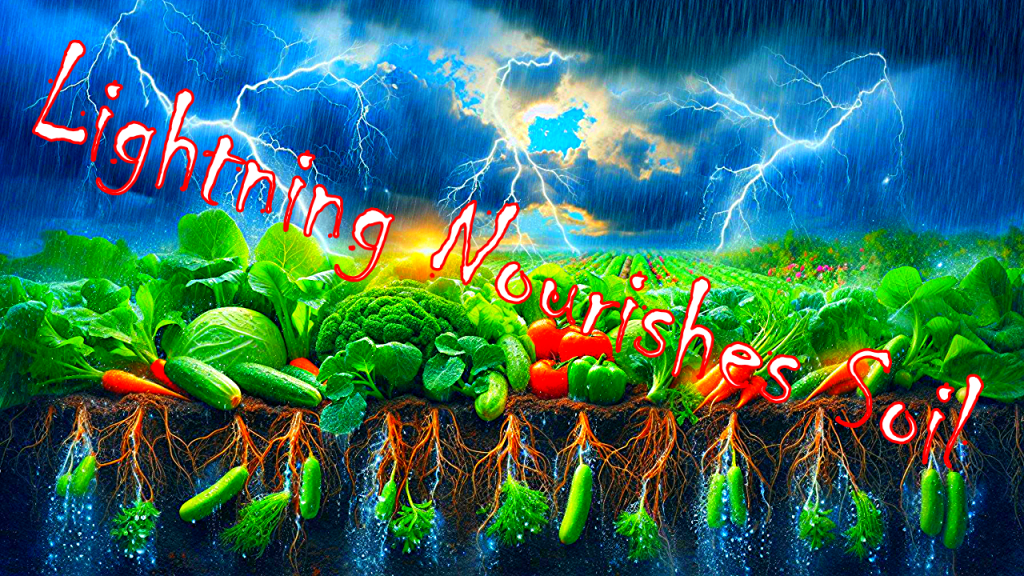
Lightning, with its powerful electrical energy, plays an initial role in making atmospheric nitrogen available to plants. The intense heat from a lightning strike breaks the strong bonds in nitrogen molecules (N₂). These freed nitrogen atoms then combine with oxygen in the air to form nitrogen oxides, specifically nitrogen dioxide (NO₂).
What happens to the nitrogen dioxide formed by lightning?
Nitrogen dioxide dissolves in raindrops, creating nitric acid (HNO₃). When it rains, this nitric acid is carried down to the earth.
How does this nitric acid become usable by plants?
Once the nitric acid reaches the soil, a crucial transformation occurs. Soil microorganisms, including various bacteria and fungi, are the primary agents in converting the nitric acid into nitrates (NO₃⁻). Nitrates are a form of nitrogen that plants can readily absorb through their root systems.
What role do soil microorganisms play in this process?
While lightning initiates the process by breaking atmospheric nitrogen bonds, soil microorganisms are the “unsung heroes” that perform the crucial step of converting the dissolved nitrogen compounds (like nitric acid) into nitrates. These microbes are responsible for most of the nitrogen fixation that makes atmospheric nitrogen available to plants.
Why is nitrogen essential for plant growth?
Nitrogen is a vital nutrient for plants. It is a key component in the building blocks of life within the plant, including proteins, DNA, and chlorophyll. Proteins are essential for plant structure and function, DNA carries genetic information, and chlorophyll is necessary for photosynthesis, the process by which plants convert light energy into chemical energy.
How do animals obtain nitrogen?
Animals obtain the nitrogen they need by consuming plants or other animals that have consumed plants. This demonstrates how nitrogen moves through the food chain, starting with its absorption by plants from the soil.
What is the “Veggie-Bed” mentioned in the source?
The “Veggie-Bed” is a specific type of garden located at “Eco Tom’s Sanctuary.” It is described as a no-till raised row organic vegetable garden. This type of gardening practice focuses on minimizing soil disturbance and using natural methods.
What is the overall message or theme of the source?
The main theme is to highlight the intricate connection between natural phenomena like lightning and the vital role of soil microorganisms in making nitrogen available for plant growth. The source emphasizes the importance of appreciating and protecting these natural processes for sustainable gardening and a healthy environment. It encourages understanding this balance to better nurture both gardens and the natural world.
Connecting the Dots: Lightning, Microbes, and Soil Nitrogen
Study Guide
This guide is designed to help you review the key concepts from the article “Discover the Connection Between Lightning and Healthy Soil” by Eco Tom.
Key Concepts
Atmospheric Nitrogen: The air we breathe is mostly nitrogen, but in a form (N₂) that plants cannot directly use.
Nitrogen Fixation: The process of converting atmospheric nitrogen into a usable form for plants.
Lightning’s Role: Lightning provides the electrical energy to break the strong bonds of atmospheric nitrogen molecules. This allows nitrogen to combine with oxygen, forming nitrogen dioxide.
Nitric Acid Formation: Nitrogen dioxide dissolves in raindrops, forming nitric acid.
Nitrates: Nitric acid falls to the earth and is converted into nitrates, a plant-available form of nitrogen.
Soil Microorganisms’ Role: Bacteria and fungi in the soil are crucial for converting nitric acid into nitrates and for further transforming other forms of nitrogen into usable forms for plants. They are the “unsung heroes” of nitrogen fixation.
Plant Absorption: Plants absorb nitrates through their roots.
Importance of Nitrogen for Plants: Nitrogen is essential for plant growth, specifically for building proteins, DNA, and chlorophyll.
Nitrogen in the Food Chain: Animals obtain nitrogen by eating plants or other animals.
Eco Tom’s Sanctuary: A suburban ecosystem that emphasizes sustainable and innovative gardening practices.
Veggie-Bed: A specific example of a no-till raised row organic vegetable garden at Eco Tom’s Sanctuary.
Sustainable Gardening: Practices that focus on environmental balance and health.
Quiz
Answer each question in 2-3 sentences.
1.What percentage of the atmosphere is composed of nitrogen?
2.Why is atmospheric nitrogen (N₂) not directly usable by plants?
3.How does lightning initiate the process of nitrogen fixation?
4.What substance is formed when nitrogen dioxide dissolves in raindrops?
5.What form of nitrogen is absorbable by plants through their roots?
6.What is the primary role of soil microorganisms in the nitrogen fixation process described?
7.Why is nitrogen essential for plant life?
8.How do animals obtain nitrogen?
9.What is the Veggie-Bed, as mentioned in the article?
10.According to the article, why are soil microorganisms referred to as “unsung heroes”?
Answer Key (Quiz)
1.About 78% of the atmosphere is composed of nitrogen.
2.Atmospheric nitrogen (N₂) is made of molecules with strong bonds that plants cannot break down or absorb directly.
3.Lightning provides the electrical energy needed to break the strong bonds of atmospheric nitrogen molecules.
4.Nitric acid is formed when nitrogen dioxide dissolves in raindrops.
5.Nitrates are the form of nitrogen that is absorbable by plants through their roots.
6.Soil microorganisms are crucial for converting nitric acid and other forms of nitrogen into nitrates, which plants can use.
7.Nitrogen is essential for plant life because it is needed to build important components like proteins, DNA, and chlorophyll.
8.Animals obtain nitrogen by consuming plants or other animals that contain nitrogen.
9.The Veggie-Bed is a no-till raised row organic vegetable garden located at Eco Tom’s Sanctuary.
10.Soil microorganisms are called “unsung heroes” because they tirelessly work to convert atmospheric nitrogen into a usable form for plants, a vital process often overlooked.
Essay Format Questions
Consider these questions for longer responses. Do not provide answers.
Describe the complete process by which atmospheric nitrogen becomes available to plants, starting with lightning and ending with absorption by roots.
Explain the relative importance of lightning and soil microorganisms in the nitrogen cycle, as presented in the article. Which do you believe is more crucial to the overall process and why?
Discuss the connection between healthy soil and the concept of sustainable gardening, drawing specifically on examples and ideas presented in the article.
Analyze the author’s use of language and metaphor (e.g., “electric dance,” “microbial workforce,” “unsung heroes”) to explain complex scientific concepts. How do these contribute to the article’s overall message?
Based on the information provided, propose ways a gardener could support the “microbial workforce” in their own garden to enhance nitrogen availability for plants.
Glossary of Key Terms
Atmospheric Nitrogen: Nitrogen gas (N₂) that makes up about 78% of the Earth’s atmosphere.
Nitrogen Fixation: The conversion of atmospheric nitrogen into forms that are usable by living organisms, primarily plants.
Nitrogen Dioxide: A chemical compound (NO₂) formed when nitrogen atoms combine with oxygen, often as a result of high-energy processes like lightning.
Nitric Acid: An acidic compound (HNO₃) formed when nitrogen dioxide dissolves in water, such as raindrops.
Nitrates: Chemical compounds containing nitrogen that are a primary plant-available form of nitrogen.
Microorganisms: Tiny living organisms, such as bacteria and fungi, often too small to be seen with the naked eye.
Soil Microorganisms: Bacteria, fungi, and other microorganisms that live in the soil and play vital roles in nutrient cycling and soil health.
Proteins: Complex molecules essential for building and repairing tissues in living organisms.
DNA: Deoxyribonucleic acid, the genetic material found in all living organisms.
Chlorophyll: The green pigment in plants that absorbs light energy for photosynthesis.
Eco Tom’s Sanctuary: A specific location described as a thriving ecosystem focused on sustainable gardening practices.
Veggie-Bed: A specific type of garden bed at Eco Tom’s Sanctuary, characterized as a no-till raised row organic vegetable garden.
No-till Gardening: A gardening practice that minimizes disturbance of the soil.
Organic Gardening: Gardening practices that avoid synthetic fertilizers and pesticides.
Sustainable Gardening: Gardening practices that aim to minimize environmental impact and conserve resources.

Eco Tom blends science with the heart of a gardener and encourages you to join him on his journey.
AI played a role in formulating this content, helping to refine and organize the information presented.
Eco Tom’s Sanctuary and UrbanGardening4u2Day.com represent a combined effort to promote and educate about sustainable gardening practices. The sanctuary acts as a practical demonstration site, while the website extends the reach through a variety of digital resources, blending real-world experiences with scientific knowledge.
Images: AI-Generated
Audio Deep Dive: AI-Generated based on user-provided sources and instructions
Eco Tom and Eco Tom’s Sanctuary is inspired by a real home garden and true-life experiences.
-The information provided on UrbanGardening4u2day.com is intended for general informational purposes only and is shared in good faith. We make no representations or warranties of any kind—whether express or implied—regarding the accuracy, adequacy, validity, reliability, availability, or completeness of any information on this website-
© Thomas Myrick 2025. All rights reserved

You must be logged in to post a comment.