Frequently Asked Questions about Eco Tom’s Sanctuary and Urban Gardening 4u2Day
- What is Eco Tom’s Sanctuary and where is it located?
Eco Tom’s Sanctuary is a 0.425-acre certified wildlife habitat located in the Western Branch area of Chesapeake, Virginia. It features a “Veggie-Bed,” which is a no-till, raised-row organic vegetable garden spanning approximately 450 square feet. The sanctuary also serves as the administrative office for the website UrbanGardening4u2Day.com. - What is UrbanGardening4u2Day.com about?
UrbanGardening4u2Day.com is a website focused on promoting sustainable vegetable gardening practices. It utilizes a combination of AI-generated images and personal photographs to visually enhance its content. The website features a blog and audio overviews, exploring plant science and sharing the experiences from Eco Tom’s Sanctuary’s Veggie-Bed. - What is the “Veggie-Bed” at Eco Tom’s Sanctuary?
The “Veggie-Bed” is a no-till, raised-row organic vegetable garden located within Eco Tom’s Sanctuary. It’s a key element of the sanctuary, serving as a practical demonstration site for the sustainable gardening methods promoted by UrbanGardening4u2Day.com. The experiences and observations made within the Veggie-Bed are shared on the website. - What does “certified wildlife habitat” mean for Eco Tom’s Sanctuary?
Being a certified wildlife habitat, recognized by the National Wildlife Federation, signifies that Eco Tom’s Sanctuary provides the essential elements needed for wildlife to thrive, including food, water, cover, and places to raise their young. This certification demonstrates a commitment to ecological stewardship and creating a welcoming environment for local fauna. - What kind of content can I expect to find on UrbanGardening4u2Day.com?
You can expect to find content related to sustainable gardening practices, plant science explanations, and practical tips and tricks derived from Eco Tom’s experiences in his Veggie-Bed. The content is presented through blog posts, audio overviews, AI-generated images, and personal photos to create an engaging and informative user experience. - What is “no-till” gardening and why is it used in the Veggie-Bed?
No-till gardening is a method where the soil is left undisturbed, avoiding traditional tilling practices. This helps to maintain the soil structure, reduce erosion, conserve moisture, and improve soil health over time. It’s a core component of the sustainable gardening methods practiced at Eco Tom’s Sanctuary and helps to promote a thriving ecosystem. - How does Eco Tom blend science with gardening?
Eco Tom, the caretaker of Eco Tom’s Sanctuary, combines scientific principles with his gardening expertise to create insightful and practical information about vegetable gardening. This likely involves understanding plant physiology, soil science, pest management, and other scientific concepts to optimize gardening practices and promote sustainable approaches. - What are the key elements of sustainability that are promoted by Eco Tom and on the UrbanGardening4u2Day website?
The website and Eco Tom’s work likely promote several elements of sustainability, including:
No-till gardening: Minimizing soil disturbance to improve soil health and reduce erosion.
Organic practices: Avoiding synthetic pesticides and fertilizers to protect the environment and human health.
Wildlife habitat: Creating a welcoming environment for local fauna to support biodiversity.
Resource conservation: Efficiently using water and other resources to minimize environmental impact.
Eco Tom’s Sanctuary: A Study Guide
I. Core Concepts & Themes
Urban Gardening: Understand the significance and practicality of growing food in urban or suburban environments.
Sustainable Practices: Recognize the importance of environmentally friendly gardening techniques, focusing on those that minimize resource depletion and environmental impact.
Organic Gardening: Comprehend the principles of organic gardening, including avoiding synthetic pesticides, herbicides, and fertilizers.
No-Till Gardening: Know the benefits of no-till methods, such as soil health improvement and reduced erosion.
AI-Generated Content in Education: Understand how technology can be used to create educational materials.
Community & Information Sharing: Recognize the role of online platforms in sharing gardening knowledge and fostering a sense of community.
II. Key Details & Facts
Eco Tom’s Sanctuary: Its status as a National Wildlife Federation certified wildlife habitat.
Veggie-Bed: Its size (450 sq ft) and its location within Eco Tom’s Sanctuary.
UrbanGardening4u2Day.com: Its purpose, content (including AI-generated images and personal photos), and focus.
Eco Tom: His role as caretaker and his approach to blending science and personal experience.
Geographic Location: The location of Eco Tom’s Sanctuary in Chesapeake, VA.
III. Quiz (Short Answer)
- What is the significance of Eco Tom’s Sanctuary being certified by the National Wildlife Federation?
- What sustainable gardening practices might UrbanGardening4u2Day.com promote on their website?
- What is the function of the Veggie-Bed within Eco Tom’s Sanctuary?
- What is the approximate total acreage of Eco Tom’s Sanctuary?
- Why is Eco Tom described as blending “science with his heart as a gardener”?
- What is the main focus of the UrbanGardening4u2Day.com website?
- What are the key characteristics of the Veggie-Bed and why is it important?
- In what ways could AI-generated images enhance the educational content on UrbanGardening4u2Day.com?
- What do you think might motivate Eco Tom to share his gardening knowledge online?
- How does the Veggie-Bed contribute to the mission of Eco Tom’s Sanctuary and UrbanGardening4u2Day.com?
IV. Quiz Answer Key - This certification signifies that the sanctuary meets specific criteria for providing habitat for wildlife, contributing to biodiversity and ecological balance.
- The website likely promotes techniques such as composting, water conservation, companion planting, and using natural pest control methods.
- The Veggie-Bed serves as a real-world demonstration site for sustainable gardening practices and a source of fresh, organic vegetables.
- Eco Tom’s Sanctuary spans 0.425 acres.
- This suggests that Eco Tom combines scientific knowledge of plant biology and ecology with his personal passion and experience in gardening.
- The main focus of the website is to promote sustainable vegetable gardening practices through educational content.
- The Veggie-Bed is a no-till, raised-row, organic vegetable garden; important because it demonstrates sustainable agriculture principles and provides a space for practical learning.
- AI-generated images can be used to illustrate complex concepts, depict different plant varieties, or create engaging visuals for online learning.
- Eco Tom may be motivated by a desire to share his knowledge, promote sustainable gardening practices, and inspire others to grow their own food.
- The Veggie-Bed acts as a practical model for implementing sustainable gardening techniques, aligning with the sanctuary’s mission and providing content for the website.
V. Essay Questions
- Discuss the relationship between Eco Tom’s Sanctuary, the Veggie-Bed, and the UrbanGardening4u2Day.com website. How do these elements work together to promote sustainable gardening?
- Analyze the potential benefits and challenges of using AI-generated images to teach gardening concepts online.
- Explain the importance of the Veggie-Bed being a “no-till” garden. How does this practice contribute to sustainability and soil health?
- Based on the information provided, what can you infer about Eco Tom’s philosophy and approach to gardening?
- How could the model of “Eco Tom’s Sanctuary” be replicated or adapted in other urban and suburban environments to promote sustainable food production and environmental awareness?
VI. Glossary of Key Terms
• Urban Gardening: The practice of growing plants, especially food crops, in an urban environment.
• Sustainable Gardening: Gardening practices that minimize environmental impact, conserve resources, and promote long-term ecological health.
• Organic Gardening: Gardening without the use of synthetic pesticides, herbicides, fertilizers, or genetically modified organisms (GMOs).
• No-Till Gardening: A method of gardening in which the soil is not disturbed by plowing, tilling, or hoeing.
• Raised-Row Gardening: Gardening where the soil is formed into raised rows or beds, often to improve drainage or soil temperature.
• National Wildlife Federation: A non-profit conservation organization dedicated to protecting wildlife and habitats.
• Wildlife Habitat: An environment that provides food, water, shelter, and space for wildlife to live and reproduce.
• AI-Generated Content: Content, such as images or text, created by artificial intelligence algorithms.
Briefing Document: Eco Tom’s Sanctuary and UrbanGardening4u2Day.com
Overview:
This briefing summarizes the key aspects of ‘Eco Tom’s Sanctuary’ and its associated website, UrbanGardening4u2Day.com. Eco Tom’s Sanctuary serves as a real-world demonstration site for sustainable gardening practices, which are then disseminated through the website.
Key Themes and Ideas:
Sustainable Gardening Focus: The core theme revolves around sustainable gardening practices. The Veggie-Bed, a no-till, raised-row organic vegetable garden, exemplifies this approach.
Education and Information Dissemination: UrbanGardening4u2Day.com acts as a platform to educate and inform individuals about vegetable gardening. The website utilizes a combination of resources including:
Blog posts
Audio overviews
AI-generated images
Personal photos
Real-World Application: ‘Eco Tom’s Sanctuary’ provides a tangible example of the gardening techniques promoted by UrbanGardening4u2Day.com. The Veggie-Bed serves as a living laboratory for Eco Tom’s gardening experiments and demonstrations.
Integration of Science and Personal Experience: Eco Tom, the caretaker of Eco Tom’s Sanctuary, blends scientific knowledge with his personal experiences to create relevant and informative content.
Wildlife Habitat: The sanctuary is recognized by the National Wildlife Federation as a certified wildlife habitat.
Important Facts:
Location: Eco Tom’s Sanctuary is located in the Western Branch area of Chesapeake, VA.
Size: The property spans 0.425 acres.
Veggie-Bed Dimensions: The Veggie-Bed occupies approximately 450 square feet.
Certification: ‘Eco Tom’s Sanctuary’ is a certified wildlife habitat recognized by the National Wildlife Federation.
Direct Quotes:
“Eco Tom’s Sanctuary is a certified wildlife habitat recognized by the National Wildlife Federation.”
“Urban Gardening 4u2Day focuses on sustainable gardening practices…”
“Eco Tom is the caretaker of Eco Tom’s Sanctuary and blends science with his heart as a gardener to create vegetable gardening information.”
“It features the ‘Veggie-Bed,’ a no-till, raised-row organic vegetable garden, and serves as the administrative office for the website UrbanGardening4u2Day.com.”
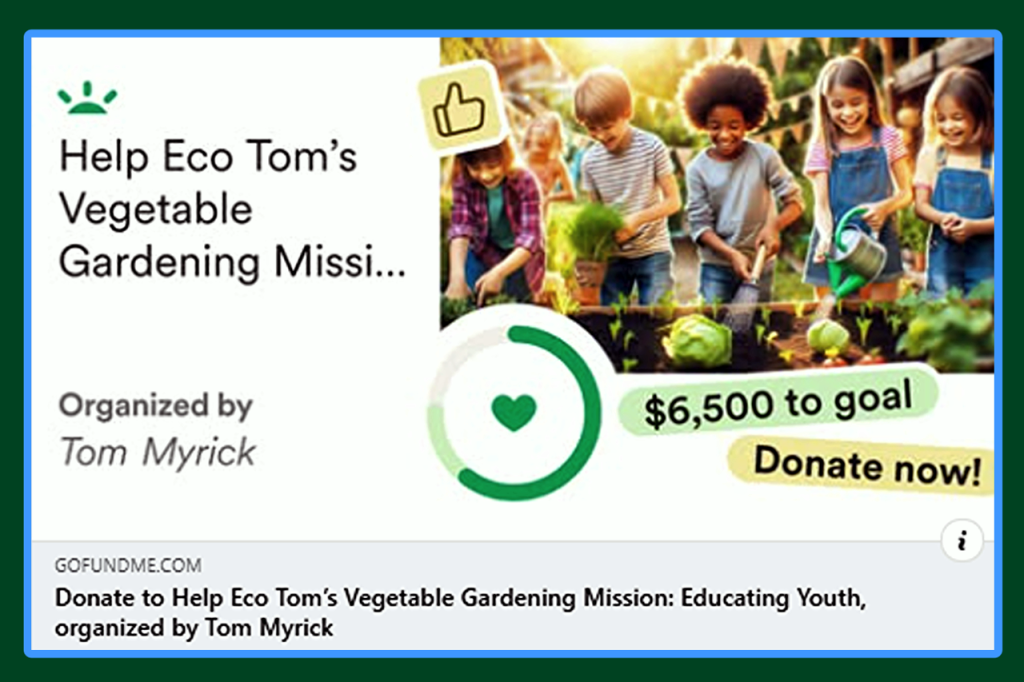
Eco Tom blends science with the heart of a gardener and encourages you to join him on his journey.
AI played a role in formulating this content, helping to refine and organize the information presented.
Eco Tom’s Sanctuary and UrbanGardening4u2Day.com represent a combined effort to promote and educate about sustainable gardening practices. The sanctuary acts as a practical demonstration site, while the website extends the reach through a variety of digital resources, blending real-world experiences with scientific knowledge.
Images: AI-Generated
Audio Deep Dive: AI-Generated based on user-provided sources and instructions
Eco Tom and Eco Tom’s Sanctuary is inspired by a real home garden and true-life experiences.
-The information provided on UrbanGardening4u2day.com is intended for general informational purposes only and is shared in good faith. We make no representations or warranties of any kind—whether express or implied—regarding the accuracy, adequacy, validity, reliability, availability, or completeness of any information on this website-
© Thomas Myrick 2025. All rights reserved


You must be logged in to post a comment.